

See the Series Introduction for Just Tao It, Part I: HERE
See the Just Tao It Series Introduction Tao/It on-ramp, PART II: HERE
See Just Tao It, Chapter 1: HERE
From my interpretation of Chapter 2 of the Tao Te Ching (Unpublished):
When people see beautiful things,
Ugly things arise.
When people see good things,
Bad things are recognized.
Difficult AND Easy
Long AND Short
High AND Low
Stand beside each other.
Each comes forth from the other.
Being AND Non-Being
Give birth to one another.
Seeing this, the wise one lives differently:
Teaching without speaking.
Doing without claiming.
Holding while letting go.
Giving without possessing.
Completing the work
Without claiming the credit.
And because nothing is claimed,
Nothing is lost or denied.
—
Chapter 2 begins with naming. The moment we name something beautiful, ugly appears beside it. Naming helps us distinguish what we’re seeing. It also tempts us to believe the distinction contains the whole.
That’s Knowing. It draws the line, gives us something to act on, makes the world usable. Wonder is what stays alive on the other side of that line — the part naming can’t finish.
The MRI looked worse than I expected.
Pain had been part of the landscape for a long time, and adaptation had become normal — push through, recover, adjust, repeat. Years of accumulated pressure had finally become visible in a form I could no longer explain away.
My body had recorded the load, the compensations, the strain, the delayed recovery, and every adjustment I’d normalized because I could still function well enough to continue.
Five years earlier, in a mountain bike accident, I’d fractured my C2 vertebra, dissected an artery, and sustained a traumatic brain injury. That experience changed plenty of things, though apparently the deeper pattern still had momentum. It takes some people longer to figure things out. I appear to be one of them.
I’ve spent decades helping leaders, teams, and organizations recognize polarities while simultaneously over-leveraging Strength to the neglect of Flexibility in my own body. The cobbler’s children may genuinely have no shoes — which probably explains why the original title for this series was almost World’s Worst Taoist. A close colleague talked me out of it, which suggests someone in the relationship was practicing wisdom.
Cape Town was supposed to be a celebration trip — Tracy’s 60th birthday, her approaching retirement, time together in one of our favorite places in the world. Instead, only days after arriving, I found myself lying in Mediclinic Cape Town, dependent on strangers for even the simplest things. Dependence rearranges perspective quickly.
Dr. Ramanare Magampa carried a calm steadiness that settled the room without effort. Patela, the head nurse practitioner, brought grounded competence and genuine care that made trust easier almost immediately, and the broader medical staff carried themselves the same way. Capability and humanity remained connected there, and within hours, the distance between strangers softened.
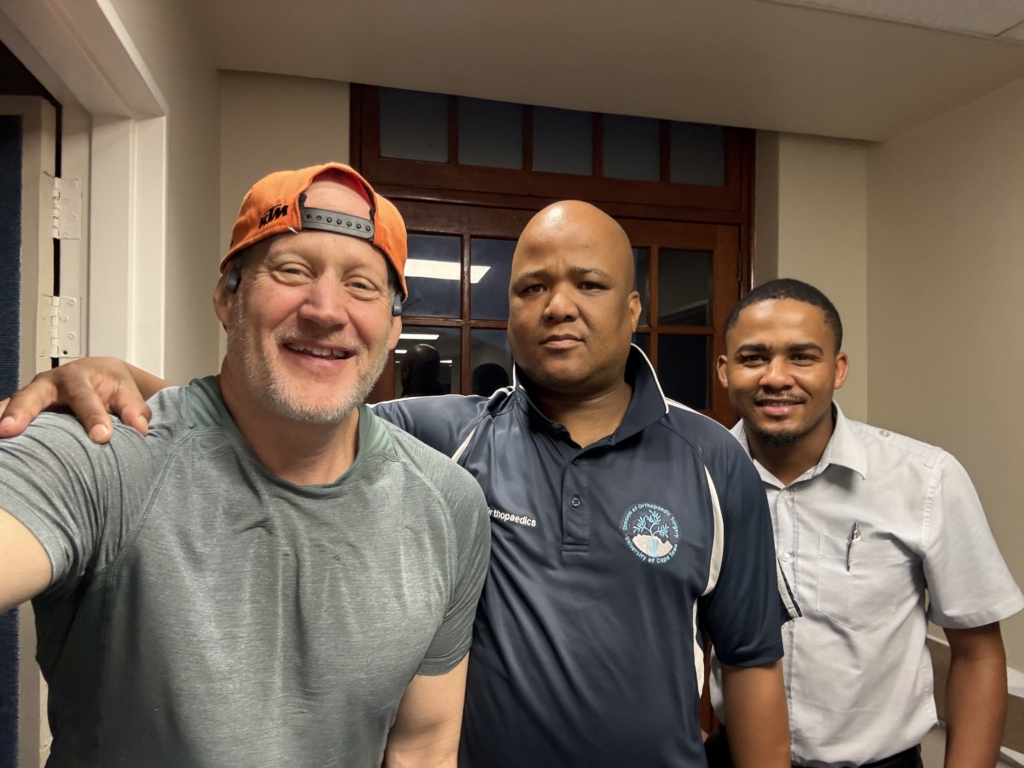
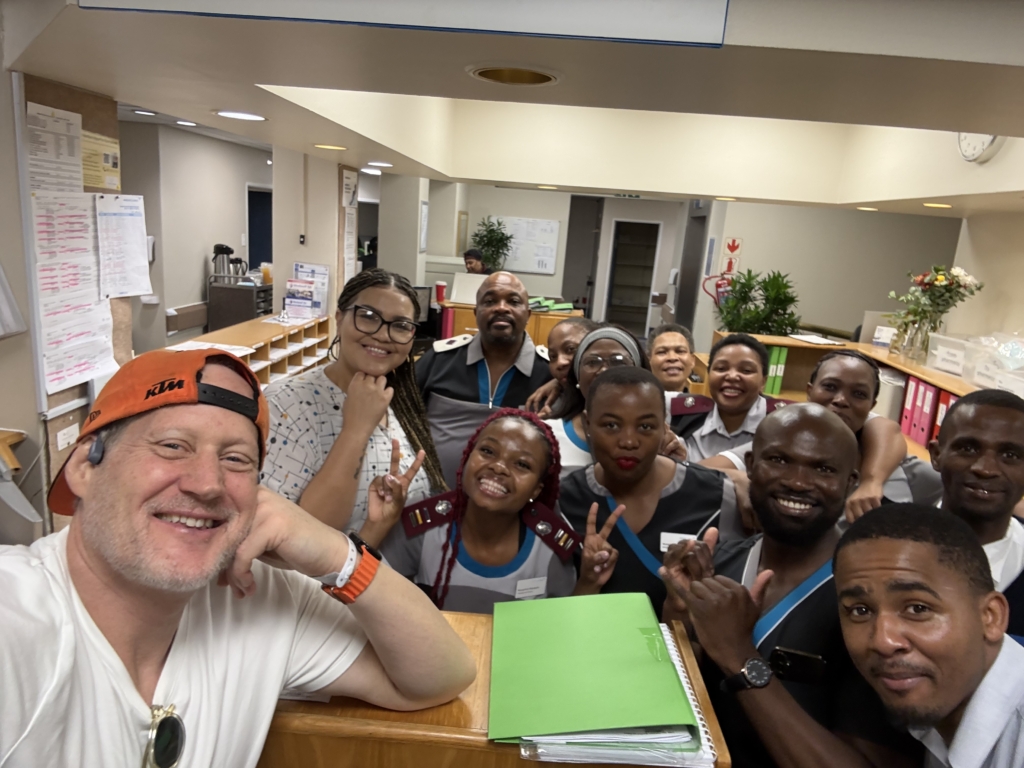
The conversations slowly deepened. Between treatment, long stretches of stillness, and more reflection than I probably would have chosen voluntarily, people shared stories about South Africa — about race, identity, resentment, hope, and what remained unresolved beneath the surface of everyday life. The past was still moving through those conversations.
Lying there, I could feel echoes of the same pattern unfolding internally. Human beings naturally reach toward clearer categories, stronger certainty, cleaner definitions. The mind wants reality to become understandable enough that suffering feels preventable.
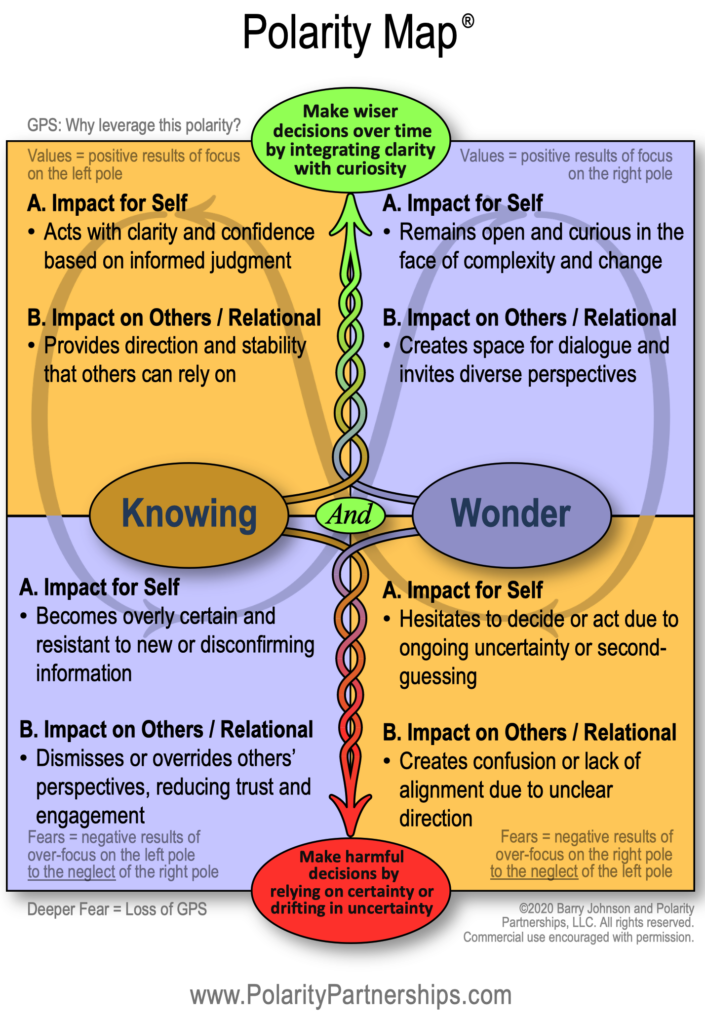
Knowing distinguishes, categorizes, measures, predicts, diagnoses, and gives us something concrete to act upon. Wonder remains in relationship with what exceeds complete certainty. Knowing moves action forward. Wonder connects action with humility and leaves room for reality to revise us.
The MRI gave me Knowing. Dependence asked something else of me entirely.
The moment we name something good, conditions form for what isn’t good to appear beside it. As long as both stay visible, discernment stays possible. Over time, partial truths can harden into identities, ideologies, and systems that lose relationship with the whole they were built to serve. People organize around what they name. Systems reinforce what they reward. Groups gather around shared certainty.
The danger begins when a value loses relationship with what it was created to serve. Justice separated from Mercy can punish without restoring. Mercy separated from Justice can leave harm unresolved. Each offers something essential. Each becomes destructive when certainty turns one part of reality into the whole.
Wonder doesn’t weaken discernment. It leaves enough openness for discernment to stay responsive.
South Africa faced this at a scale far beyond anything happening in my hospital room. After decades of apartheid and systemic harm, the country faced demands for truth, justice, accountability, repair, reconciliation, and a future in which people could continue living together. No single value could carry that future alone.
Another possibility took shape alongside justice itself, formalized in the Truth and Reconciliation Commission. Truth remained necessary. Reconciliation remained necessary. Preserving the chance of a future where people could keep living together — without simply repeating the conditions that created the suffering in the first place — changed the shape of the conversation itself.
Artificial intelligence magnifies this same tension. It expands our capacity to predict, optimize, analyze, simulate, retrieve information, and influence behavior. Wonder asks what remains outside the frame, which human consequences resist measurement, and whether our technical capacity is developing faster than our wisdom. The more capable our systems become, the more consequential our relationship with certainty becomes.
Human beings often understand realities intellectually long before those realities become embodied enough to reshape how we live. The Tao rarely seems learned once. It returns through consequences until understanding begins to enter the way we live.
Knowing gives us discernment, science, strategy, knowledge, and the capacity to act. Wonder helps that knowledge remain responsive to what exceeds certainty and to the larger purposes our answers serve.
I left Cape Town knowing more about my spine than I wanted to know. I also left with greater respect for everything knowledge couldn’t settle: how healing unfolds, how strangers become trusted companions, how a country lives with an unfinished past, and how long it can take for an understood truth to enter the body.
Knowing helps us see. Wonder leaves room for reality to continue teaching.
Here’s a Polarity Map to help see the pattern of Knowing And Wonder:
INVITATIONS
How do you make decisions under uncertainty, over time? To take a short Polarity Assessment based on the Knowing And Wonder polarity, CLICK HERE
NOTE: the results include Leveraging Action Steps and Early Warnings (to support maximizing upside benefits and minimizing downside limitations).
To use an AI-trained “Chat w/Cliff” for Step 1, Seeing” CLICK HERE.
Ready for the Polarity Advantage? Go deeper into Polarity Thinking, see our online self-directed Credentialing and Introduction to Polarity Practice or in-person training with Barry Johnson and me at Kayser Ridge by CLICKING HERE.