


See the Series Introduction for Just Tao It, Part I: HERE
See the Just Tao It Series Introduction Tao/It on-ramp, PART II: HERE
See Just Tao It, Chapter 1: HERE
From my interpretation of the Tao Te Ching, Chapter 62 (Unpublished):
It is the infinite source,
for good souls to find treasure,
for those who are lost
to find shelter.
Fine writings can elevate one to an honorable status.
Good deeds can earn the respect of others.
These expressions of value
are available to almost anyone.
And to yourself, be true.
Crossing paths with those in great power,
you may have credentials and reputation to offer.
Yet remembering who you are
for another
may become
your greatest treasure
and shelter.
Understanding why
so many treasure It
comes naturally.
Looking within,
you discover
all along,
It was there.
In returning,
one discovers
nothing separates
you from Its embrace.
—
You may see a different tension in these lines, or several. After nearly forty years in relationship with the Tao Te Ching and twenty years practicing Polarity Thinking, there are two that have become increasingly difficult for me to separate.
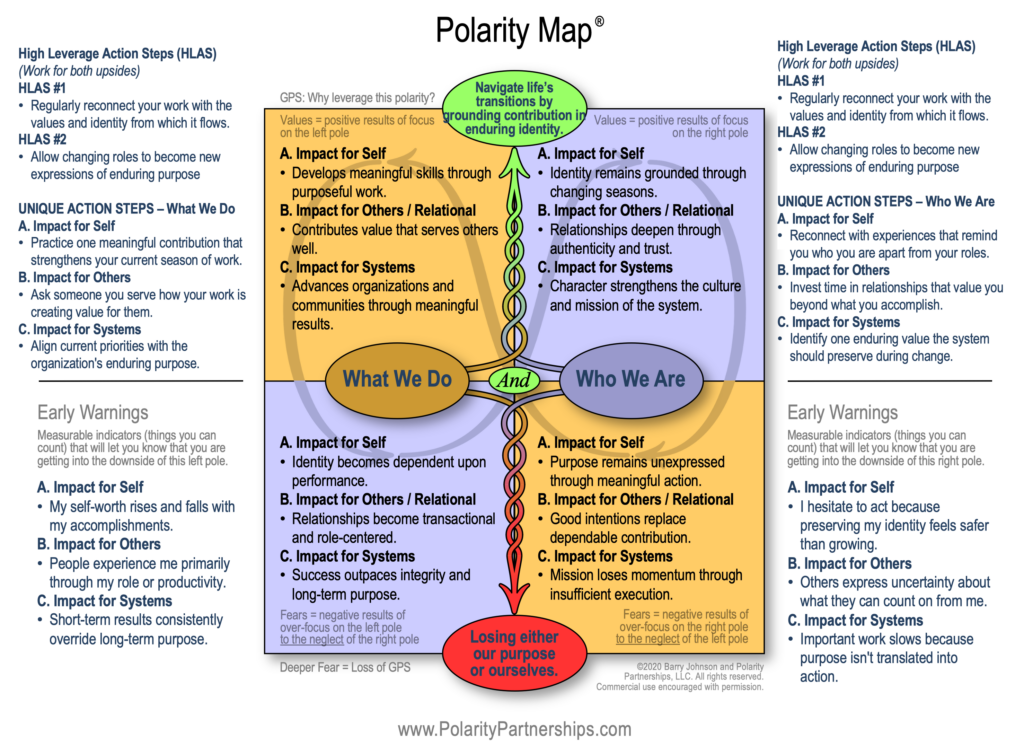
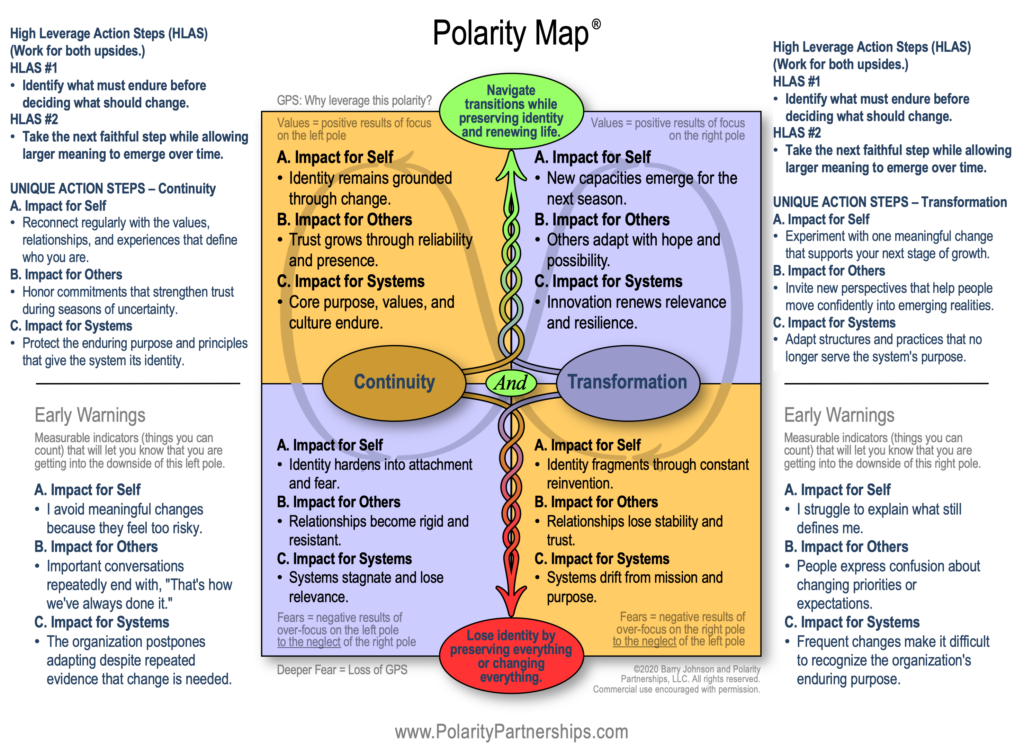
One is What You Do AND Who You Are—the contribution you make and the person from whom that contribution flows. The other is Continuity AND Transformation—what deserves to travel with you and what the next season is asking to change. Together, they shape how we show up when familiar roles, identities, relationships, and plans begin giving way.
A $750 truck helped me recognize both.
The 1971 International Harvester pickup truck sitting at the edge of Kayser Ridge didn’t start out as a symbol for two of the biggest turning points in my life. It just ended up that way.
There was a stretch of years when nearly everything seemed to give way at once. A divorce. My second back surgery in three years. A lawsuit over the sale of our home. A promotion at The Washington Post that disappeared just as it was becoming real. Two hours outside Washington, D.C., in Berkeley Springs, West Virginia, I had started building a retreat center — a place I hoped would become somewhere for renewal. Construction stalled. Between 2004 and 2006, I camped inside the unfinished shell most weekends, the window and door openings still bare, nursing more than one kind of pain.
Most of what I owned sat in a storage unit, and every monthly bill reminded me how little margin remained. I needed a way to move everything to the unfinished retreat.
Johnny was a neighborhood handyman who had renovated our Capitol Hill basement into a one-bedroom rental — income my wife and I were counting on to help finance the dream. He owned a 1971 International Harvester pickup, faded yellow and black, that the neighbors considered an eyesore. It sat unmoved for months at a time. When the divorce left me without a car, I asked if he’d sell it.
“$750,” he said.
I got it running and had it painted white, mostly to appease the neighbors. That truck made more trips between D.C. and West Virginia than I can count. Strangers at gas stations treated it with a respect I hadn’t earned any other way — offers to buy it, more than once. I still needed it.
Eventually the storage unit emptied out, and Kayser Ridge became the new place for everything I owned, stacked on pallets and covered in tarps. Life started to stabilize. I bought a more reliable vehicle and parked the International on a flat stretch of the property to deal with later. Later turned out to be two decades. The truck sank further into the landscape every year, until it became part of how people who visited Kayser Ridge learned the story of that transition.
Last year, working on a new section of garden, the idea arrived to make the truck part of it. What had been a survival tool during one transition became a marker for another.
I couldn’t have planned any of it. During those years I thought I was only trying to get through one more impossible season.
Did I have moments of doubt? Yes.
What carried me through was surprisingly ordinary. One thing at a time. Nothing lasts forever. This hard season can’t be the last word. So, carry on.
It took two decades to appreciate what the truck had become along the way: a reminder that transitions tend to reveal what they meant only after we’ve passed through them.
Years after buying the property, I heard a scholar of sacred mountains answer a question that has stayed with me ever since. A mountain becomes sacred, he said, by the degree of sacredness people attach to it.
I’ve come to think a piece of land becomes sacred the same way. Kayser Ridge earned whatever sacredness it has slowly, through everything that happened there afterward — the truck, the divorce finalizing while construction sat half-finished, the seasons camping in an unfinished shell as nature began taking it over, and later, the experiences of learning, the gatherings, the people who returned. Enough life returning to the same ground until the ground starts holding more and more of what happened there.
Places remember.
What actually survived that season, and what only looked like survival at the time?
I found language for it in recent weeks, reading Jim Collins’s What to Make of a Life. He names the disruptions he calls “Cliffs” — divorce, illness, lost work, retirement, moments that reorganize a life. After the Cliff comes “Fog,” where the future disappears before another one arrives. His research found people rarely navigate Fog through certainty. They move one step at a time, which is what I’d been doing all along. What survived the Cliff, he found, were the deeper capacities he calls Encodings — the part of a person circumstances cannot erase. It’s the same pattern he found decades earlier, studying companies built to last: the ones that endured were the ones that preserved the core while continuing to stimulate progress around it.
Collins’ Encodings feel surprisingly familiar to me. They describe capacities that endure when roles, titles, and circumstances change. Read through the lens of the Tao, they echo What You Do AND Who You Are. Read through the lens of Polarity Thinking, they also reflect Continuity AND Transformation. Different language. Different discipline. The same enduring pattern.
My divorce, the surgeries, the lawsuit, the lost promotion, the half-built retreat — that was the Cliff. A $750 truck bought from a neighbor so I could move what I owned wasn’t a plan. It was the next step. The two decades it spent sinking into the landscape were the Fog. What carried through wasn’t the truck. It was whatever kept me building something out of very little, season after season. Kayser Ridge took in whatever I brought it — the truck, the belongings, the half-finished plans — and slowly turned into ground worth returning to, the kind of shelter the ancient poem from the Tao Te Ching describes, though it took me years to recognize it as that, and I was deep into my own interpretation at the time.
I’m standing at another one of those turning points now — less as crisis and more as a season asking to become something else. I don’t know yet what will turn out to have been the truck, and what will turn out to have been the treasure.
Every generation meets its own Cliffs.
Every generation inherits something worth preserving.
Every generation inherits something asking to change.
The questions remain remarkably consistent.
What deserves Continuity?
What is inviting Transformation?
Who are we becoming?
What kind of people will carry that work forward?
Artificial intelligence, democracy, sustainable development, and challenges we cannot yet imagine will continue asking these questions long after this chapter is read. Technologies will change. Institutions will evolve. New generations will inherit different Cliffs. The deeper invitation remains remarkably steady.
The Tao never promised that life would stop changing.
It reminds us there is something within us worth carrying into every change.
Looking within,
you discover
all along,
It was there.
Some of what I’m carrying into this next season may already be treasure. I simply don’t recognize it yet. Twenty years isn’t a promise I get to make myself anymore. One day at a time will have to do.
The light goes long over the ridge most evenings now. The garden holds its shapes a little longer in that light — the truck among them, paint gone dull, still standing where I put it, still holding whatever it’s holding.
Here’s a Polarity Map for What We Do And Who We Are:
Here’s a Polarity Map for Continuity And Transformation:
INVITATIONS:
To use an AI-trained “Chat w/Cliff” for Step 1, “Seeing” CLICK HERE.
Ready for the Polarity Advantage? Go deeper into Polarity Thinking, see our online self-directed Credentialing and Introduction to Polarity Practice or in-person training with Barry Johnson and me at Kayser Ridge by CLICKING HERE.