


See the Series Introduction for Just Tao It, Part I: HERE
See the Just Tao It Series Introduction Tao/It on-ramp, PART II: HERE
See Just Tao It, Chapter 1: HERE
From my interpretation of the Tao Te Ching, Chapter 10 (Unpublished):
Do you travel in body, spirit, and soul,
without losing their unity?
Are you as tender in your energy
as a baby?
Is your mirror
clear?
Are you present in such a way
others follow easily?
When you meet anxiety,
can you be simple?
Be useful.
Hold, without possessing.
Act, without controlling.
—
I was halfway up a trail at Kayser Ridge when I came across a doe standing with her fawn. She positioned herself directly between me and her young and held perfectly still. Everything about her posture communicated readiness. Everything about her presence communicated restraint.
She had the capacity to act. She also carried no urgency to force action before it became necessary.
I kept walking. She stayed exactly where she was.
The older I get, the more convinced I become that human beings struggle to hold that kind of integrated presence under pressure.
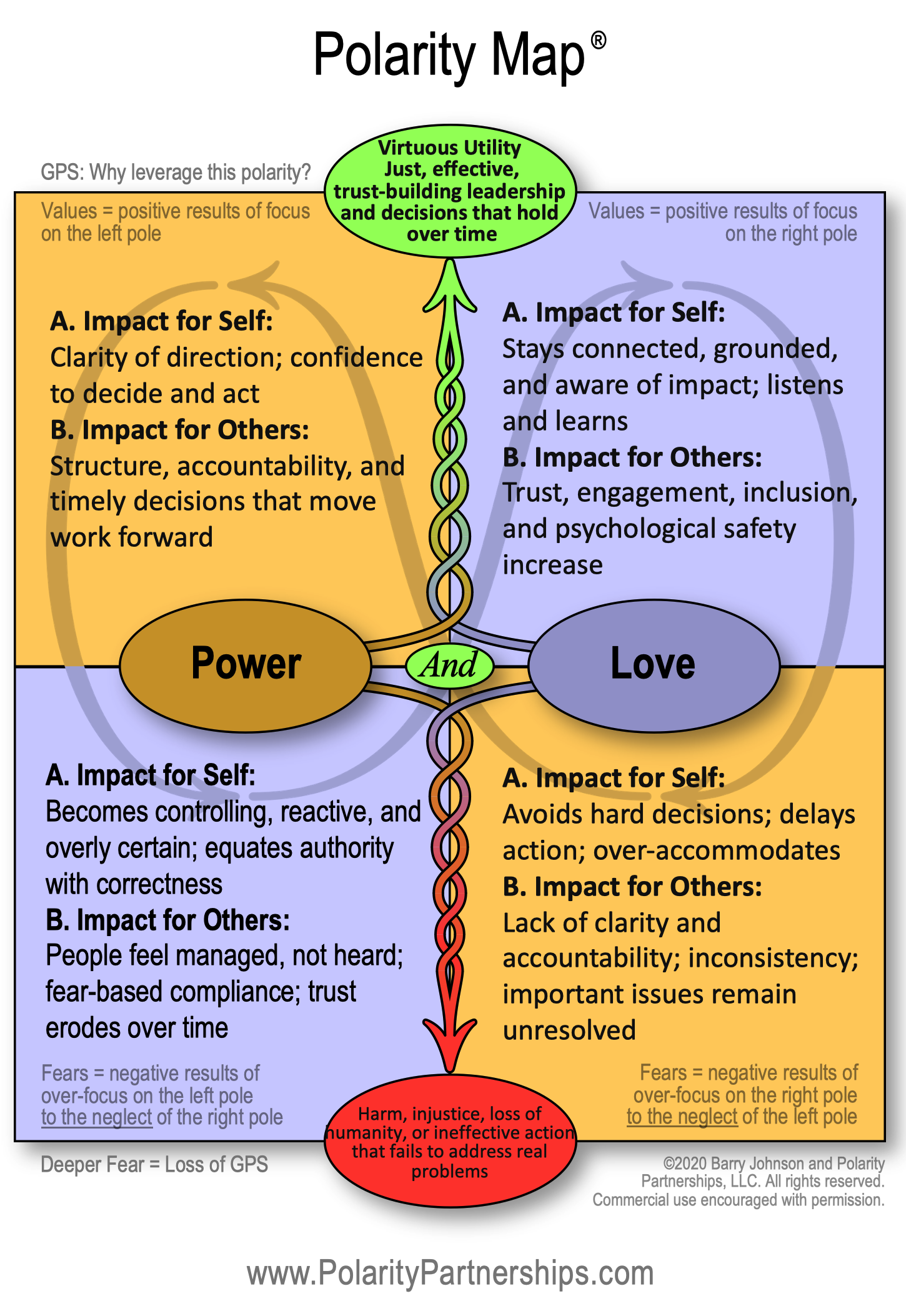
Power AND Love.
Most people lean harder toward one side when conditions intensify. Some tighten control, dominate space, escalate certainty, and confuse force with leadership. Others soften excessively, avoid conflict, delay necessary action, and confuse care with the absence of accountability. Both patterns usually start from sincere intention. Both create predictable forms of suffering over time.
Chapter 10 is a question about integration more than leadership technique. Can strength remain connected to tenderness? Can authority remain connected to relationship? Can human beings hold power without becoming possessed by it?
We’re living through a moment where humanity is accelerating its collective capacity for Power while developing the emotional maturity to steward it at a much slower pace. AI is intensifying that gap. It can optimize, persuade, predict, and scale decisions faster than any human system before it. What it doesn’t generate is Love — the humility, empathy, discernment, and restraint required to steward power responsibly.
Technology accelerates existing human patterns.
The doe didn’t need any of AI’s certainty. She only needed to know which posture the moment required, and she knew it instantly.
Martin Luther King Jr. described the polarity decades ago: “Power without love is reckless and abusive, and love without power is sentimental and anemic.”
Power matters because human beings need the capacity to act, protect, establish boundaries, and interrupt harm. Love matters because people need dignity, empathy, trust — the experience of being treated as human beings, not variables in someone else’s system. The trouble begins when one side starts functioning as though it alone carries the future.
I’ve worked inside organizations where Power dominated almost completely. Results mattered, metrics mattered, performance mattered. People complied. Few trusted. Fear drifted underground and disguised itself as professionalism.
I’ve also worked inside systems overcorrecting toward Love, gradually losing relationship with accountability and difficult decision-making. People felt heard. Few things improved. Problems became endlessly discussable and increasingly untouched.
Barry Oshry calls these Power Processes and Love Processes — too much force without relationship fractures a system, too much accommodation without structure weakens it differently.
Healthy democracies need both too. Freedom AND Authority. Justice AND Due Process. Democracies weaken whenever one side begins treating the other as unnecessary.
The doe would have understood that instinctively. She wasn’t choosing between protecting her fawn and staying calm about it. She was doing both at once, which is the only way either one works.
The doe on the trail embodied something modern culture increasingly struggles to recognize: integrated power. Protective capacity without unnecessary escalation. Presence without passivity. Strength without domination.
The Taoist image of the infant points toward the same thing — supple, responsive, alive, unburdened by rigid identity. Modern culture tends to mistake hardness for strength. The Tao suggests the opposite. Rigidity breaks. Suppleness adapts.
The mirror Lao Tzu references matters here too. A clear mirror reflects reality without distortion from ego, fear, or tribal loyalty. The difficulty is that human beings are extraordinarily skilled at confusing projection with perception.
Carl Jung spent much of his life warning about exactly this. What remains unconscious eventually gets projected outward. Enemies become containers for disowned fear, rage, and shame. The more fragmented people become internally, the easier it becomes for systems to manipulate identity and belonging externally.
The doe didn’t perform her fear outward. She just stood in it, still, and let it do its job.
The deeper challenge isn’t whether humanity becomes more technologically capable. We clearly will. It’s whether we develop enough maturity to remain fully human while holding increasingly amplified forms of power — less a technology problem than a developmental one.
I get this wrong regularly. Most of us probably do.
I still think about that doe. She never surrendered her strength. She never abandoned her tenderness. She simply knew which one the moment required.
Here’s a Polarity Map for Power And Love:
INVITATIONS
If you want to take a quick self-assessment for Power And Love: CLICK HERE
NOTE: the results include Leveraging Action Steps and Early Warnings (to support maximizing upside benefits and minimizing downside limitations).
Try the AI-trained “Chat w/AI Cliff” for support for Step 1, Seeing Polarities
Ready for the Polarity Advantage? Check out our online self-directed Basics, Credentialing, or in-person training with Barry Johnson and me at Kayser Ridge! Certifications and Courses