


See the Series Introduction for Just Tao It, Part I: HERE
See the Just Tao It Series Introduction Tao/It on-ramp, PART II: HERE
See Just Tao It, Chapter 1: HERE
From my interpretation of the Tao Te Ching, Chapter 11 (Unpublished):
Spokes unite at the center of a wheel.
But the wheel’s use
takes place where the wheel is not.
Clay is molded to make a bowl.
But the bowl’s use
takes place where the bowl is not.
Walls are raised to build a house.
But the house’s use
takes place where the walls are not.
In the “And” between
there and not,
is the useful spot.
—
A small wooden bowl sits on my desk. Made from walnut and smooth from years of use, it serves as a miniature expression of what Chapter 11 is pointing toward. The craftsmanship matters. The wood matters. Yet the usefulness lives in the space it holds.
I’ve always seen Kayser Ridge as a much larger bowl.
For more than twenty years, I have been building and stewarding it—somewhat as a retreat center in the commercial sense, but more as a Space where small groups could do big things. Long before Kayser Ridge existed, I had experienced the power of places intentionally designed for learning, reflection, experimentation, and growth. During my years with NTL (National Training Laboratories), I witnessed what happened when people gathered at the Founder’s House in Bethel, Maine. Through my connection with the Gestalt Institute in Cleveland, I experienced something similar. People arrived carrying questions, uncertainty, aspirations, and challenges. They left with new insights, stronger relationships, different perspectives, and sometimes a deeper understanding of themselves.
Chapter 11 has always felt close to home because it speaks directly to that experience.
A wheel requires spokes, yet its usefulness depends upon the open hub at its center. A bowl requires clay or wood, yet its usefulness depends upon the space it holds.
When I first encountered Chapter 11, I didn’t experience it as an abstract philosophical observation. I experienced it as a practical insight about how meaningful learning, growth, and transformation often occur. In containers.
Experiences require containers. Relationships require containers. Learning requires containers. Communities require containers.
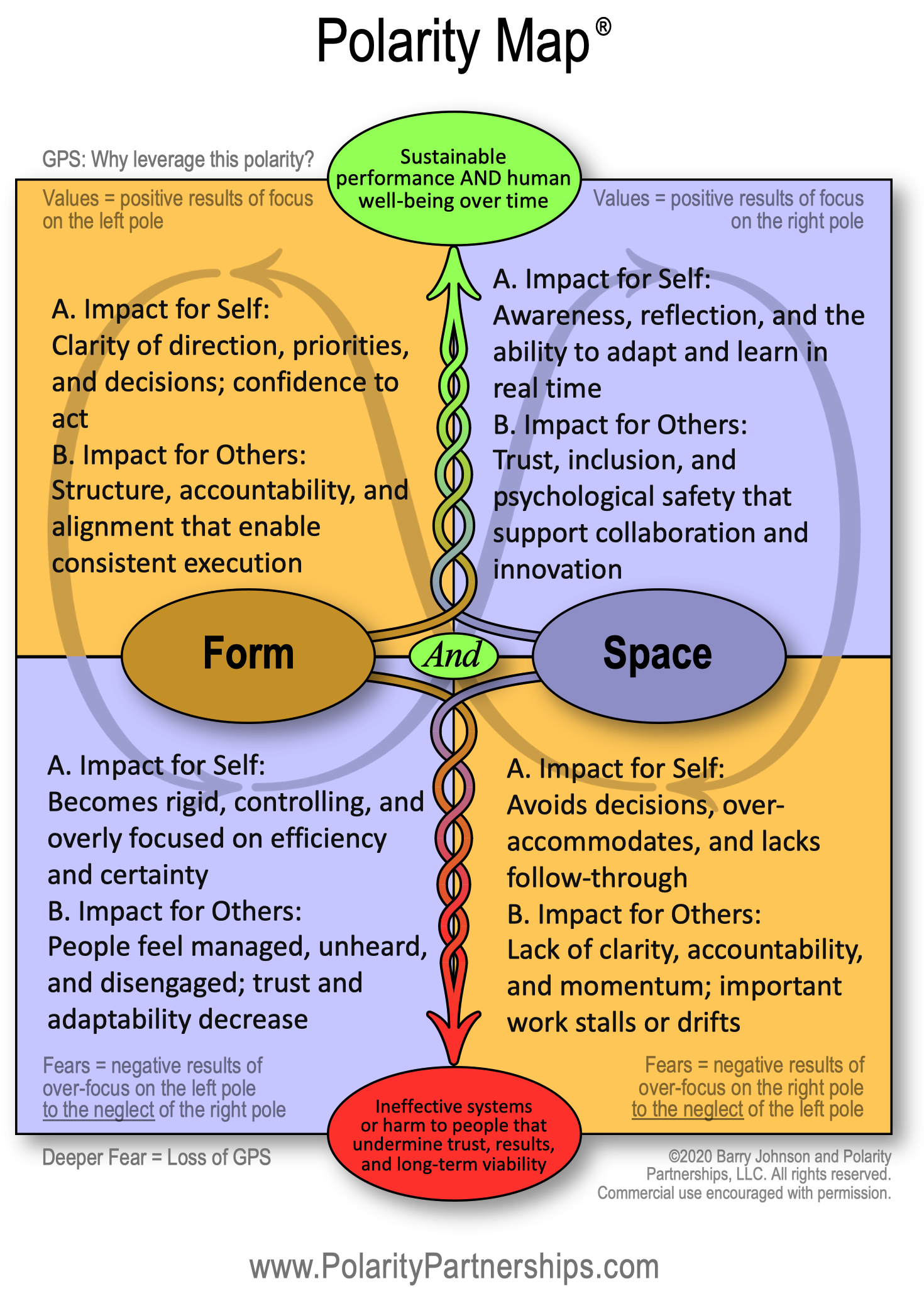
Form creates Space. Space gives Form its purpose. The wisdom lives in the And between. That understanding became one of the inspirations behind Kayser Ridge.
The trails, gathering spaces, guest rooms, gardens, fire pit, meeting areas, and learning environments at Kayser Ridge were never ends in themselves. Their purpose was to support conversations, reflection, learning, community, discovery, and renewal. The forms mattered because they helped create conditions where something meaningful could emerge.
When people leave Kayser Ridge, they rarely talk about a building, a trail, the decks, or the latest project. They talk about the conversation that changed their thinking. The decision they finally made. The relationship that deepened. The unexpected insight that arrived during a walk through the woods. The clarity that emerged while watching stars, clouds, or a sunrise after months of absence.
That insight—Form giving rise to Space, Space giving Form its purpose—connects to another dimension of this thinking that has shaped my work for decades.
Over the years, Peter Senge’s work on systems thinking helped me appreciate another dimension of Space.
One of Senge’s observations is that cause and effect are often separated in both time and place. We naturally search for explanations close to the problems we are experiencing. Yet many of the forces shaping our lives originate somewhere else and reveal their consequences much later. Because those consequences often fall outside our immediate field of vision, we can spend enormous amounts of time reacting to events while missing the larger patterns producing them.
Senge describes this challenge through the idea of a “learning horizon.” Individuals, organizations, and societies all operate within horizons that define what they can see across time and space. Consequences that occur beyond those horizons become difficult to learn from through direct experience.
Systems thinking expands that horizon.
Chapter 11 points toward something similar.
The larger the Space we can hold, the more likely we are to recognize relationships connecting events that otherwise appear unrelated. We begin to see patterns unfolding across longer periods of time, across larger groups of people, and across systems that extend well beyond our immediate concerns.
This insight has shaped much of my work with Polarity Thinking. The challenge is often less about the event directly in front of us than about understanding the relationships surrounding it. Expanding our Space expands our capacity to learn.
Senge also writes about the importance of creating relational space. Others might call it trust, psychological safety, authentic dialogue, or genuine connection. Whatever language we choose, the experience is familiar. We know it when we feel that a space is safe enough to be honest, curious enough to explore, and connected enough to think together, something larger than any one person often begins to emerge. New possibilities appear. Assumptions can be challenged. Relationships deepen. Collective intelligence becomes available.
The “Use of Self” class I took in my Organization Development graduate program at the Founder’s House created that kind of Space for me as did the program at the Gestalt Institute of Cleveland. Both spaces have since been sold. I try to carry both of those traditions forward in the Space at Kayser Ridge.
The world is different from the one I occupied when I bought the first 20-acres of land in 2002. I believe Spaces like Kayser Ridge will be increasingly more important as we humans navigate our relationship with Artificial Intelligence.
AI is dramatically expanding our ability to generate Form. Plans, analyses, designs, policies, content, and recommendations can now be produced with astonishing speed. Every month seems to introduce another leap in capability. Meanwhile, wisdom, discernment, judgment, moral courage, and relational maturity continue to develop at the pace they always have.
We carbon-based humans don’t work like silicon-based algorithms. We’re tremendously adaptable, but we require space. We need rest and time to reflect and integrate if we’re to create generative, sustainable change. We are generating Form at AI speed while developing Space at human speed.
The opportunity before us is not simply technological. It is learning how to create sufficient Space for human wisdom to guide increasingly powerful forms.
The more capable our tools become, the more important it becomes to cultivate the capacities that help us decide how those tools will be used, what purposes they serve, and what consequences they create over time.
Perhaps that is why Chapter 11 remains one of my favorites.
It reminds me that usefulness rarely resides in Form alone.
The wheel turns because of its hub.
The bowl serves because of its center.
The walls of the house provide safety in the space.
And places like Kayser Ridge matter because they create conditions where people can gather, reflect, learn, connect, and occasionally discover something important about themselves and the world around them.
The Forms create the conditions AND the Space makes the work useful.
Here’s a Polarity Map for Form And Space that makes that dynamic visible:
INVITATIONS
If you want to take a quick self-assessment for Form And Space: CLICK HERE
NOTE: the results include Leveraging Action Steps and Early Warnings (to support maximizing upside benefits and minimizing downside limitations).
How is Form And Space showing up for you now?
Try the AI-trained Chat w/AI Cliff for support for Step 1, Seeing Polarities
Ready for the Polarity Advantage? Check out our online self-directed Basics, Credentialing, or in-person training with Barry Johnson and me at Kayser Ridge! Certifications and Courses